
Science Students Test Physics with Marble Runs and Paper Boats
Casey-Westfield School Board Meeting | Feb. 23, 2026
Article Summary: Casey-Westfield science and math students recently engaged in hands-on engineering challenges to test theoretical concepts. Projects included 8th graders engineering slow-motion marble runs and Calculus students constructing weight-bearing boats from paper.
STEM Projects Key Points:
-
8th Grade Science: Created “Great Marble Run (Slow-Down)” tracks to study Newton’s laws and maximize friction.
-
Calculus: Built boats from a single sheet of laminated paper to test optimization and volume.
-
Geometry: Used inclinometers and trigonometry to measure the heights of gym banners and rafters.
-
Biology: Designing solutions for real-world wildlife issues using the Engineering Design Process.
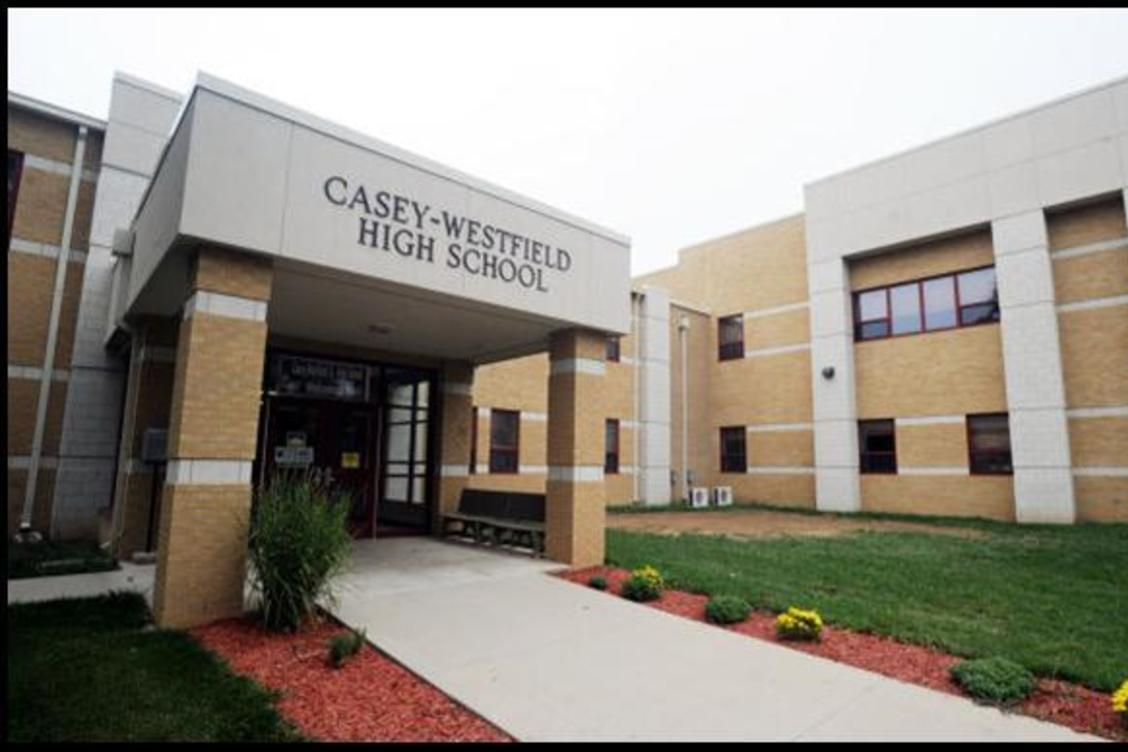
Casey-Westfield Junior and Senior High students moved beyond textbooks this month, applying physics and calculus concepts to physical engineering challenges.
According to the Building Report submitted to the School Board on February 23, 8th-grade science students completed a study of motion and Newton’s laws with the “Great Marble Run (Slow-Down)” challenge. Unlike traditional races, the objective was to maximize friction and reduce the angle of descent to keep the marble in motion for as long as possible.
The report noted that while a standard marble drop from one meter takes 0.5 seconds, the students’ engineered tracks successfully extended that time significantly, averaging between 4 and 21 seconds. Students then calculated potential energy, standard deviation, and percent slowdown.
At the high school level, Calculus students concluded an optimization unit by building boats from a single sheet of laminated paper. The challenge required students to maximize the volume of 3-dimensional shapes to hold the most weight. The vessels were tested by filling them with pennies until they sank.
Additionally, High School Geometry classes utilized the school gymnasium for a trigonometry lesson. Students used an inclinometer to measure the heights of the gym clock, rafters, and banners from the ground level.



Partly Cloudy
