
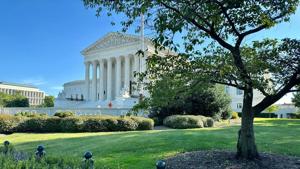
Supreme Court allows third-country deportations, will hear arguments
The U.S. Supreme Court, in a 6-3 ruling on Tuesday, temporarily allowed the Trump administration to deport people to countries other than their own until oral arguments can be heard later this year.
Justices on the high court will hear arguments in December over whether immigrants can object to being deported to countries other than their own. A federal judge in Massachusetts, Judge Brian Murphy, blocked the Trump adminstration from pursuing the policy.
Lawyers for the immigrants and immigrant advocacy organizations said the Trump administration’s policy is placing individuals in danger who are deported to unfamiliar countries. The lawyers said immigrants who are deported have been detained in the country’s prisons for months.
“The record reflects that third countries regularly force or pressure class members with protection to return to their countries,” the lawyers wrote in a brief to the high court.
Lawyers for the Trump administration said the policy has been operational for the last 15 months in cases where an individual’s country of origin does not accept their return. The lawyers said the judge’s order prevented the U.S. Department of Homeland Security from deporting 70 immigrants with criminal convictions to three separate countries.
The administration said the policy requires coordination between the United States and countries where migrants are deported.
“The DHS policy therefore states that, when an alien is to be removed to a third country, if that country has credibly assured the Secretary of State that it will not persecute or torture anyone, the agency may promptly remove the alien; absent such assurances, the alien will be given notice of his removal to that country and an opportunity to raise any fears of potential persecution or torture there,” lawyers for the Trump administration wrote.
Justices Sonia Sotomayor, Elena Kagan and Ketanji Brown Jackson dissented from allowing the Trump administration to pursue the deportation policy. The dissenters did not elaborate in their filing.
The court has yet to set a date for the December arguments in the case.




Sunny
