
U.S. ends 12-year anti-ISIS mission in Iraq
After 12 years, the U.S. marks the end of Operation Inherent Resolve in Iraq with the withdrawal of American forces from Erbil Air Base.
U.S. Central Command announced the withdrawal Wednesday morning, describing the end of the mission as “orderly.”
The end of OIR began nearly a year ago, after being in the Middle Eastern country since 2014 to fight the Islamic State in Iraq and Syria.
American taxpayers spent billions supporting OIR, with the most recent figures showing approximately $11.5 billion enacted for FY 2024 and 2025, and $9.5 billion “obligated” as of Nov. 30, 2025, according to a Lead Inspector General report delivered to Congress on the operation.
The withdrawal from Iraq is “part of a planned transition to a U.S.-Iraq bilateral defense relationship.”
CENTCOM adds that the “combined Joint Task Force-Operation Inherent Resolve remains operational and is now headquartered in Jordan as U.S. forces continue the counter-ISIS mission in Syria alongside Coalition partners and the Syrian government.”
Erbil Air base “served as the main operational hub for CJTF-OIR and hosted most of the 1,500 American and Coalition forces supporting counter-ISIS operations.”
CENTCOM Commander Adm. Brad Cooper thanked the thousands of American service members and civilians who supported the mission in Iraq, claiming the Islamic State of Iraq and Syria (ISIS) is no longer a major threat in Iraq.
“Because of your grit, sacrifice and professionalism, ISIS no longer poses a systemic threat to Iraq’s national security and Iraqi security forces, including the Peshmerga and other Iraqi Kurdistan Region security forces, now possess the capacity, leadership, and operational independence to unilaterally manage threats to their homeland,” Cooper said in a statement.
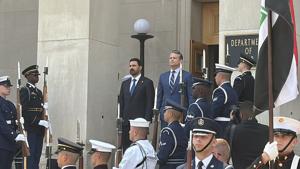
President Donald Trump and Secretary of War Pete Hegseth met with Iraqi Prime Minister Ali Al-Zaidi in July in Washington, D.C., ahead of the planned transition to return the country’s security to the Iraqi government.
While U.S. forces have withdrawn from Iraq, Cooper underscores that American troops will remain in the region.
“As we step back and hand full primary responsibility for Iraq’s security to the Government of Iraq and the brave people of Iraq, U.S. and Coalition forces stationed across the region will remain ready to respond to any ISIS threats that arise,” said Cooper. “Maintaining our vigilance and readiness is essential to protecting the U.S. homeland and strengthening regional security.”
During the July meeting at the Pentagon between Hegseth and al-Zaidi, the secretary touted the success of the operation while commenting that it was time for the U.S. to shift its focus to Iran and its terror proxies in the region.
With the cessation of OIR, Iraqi Security Forces will assume the responsibility to fight terrorists in Iraq. The president and Hegseth underscored the hundreds of attacks carried out against American forces over the years, led by Iranian “aligned” terror groups, as well as the Quds Force, a branch of Iran’s Islamic Revolutionary Guard Corps.
Despite the focus shifting from fighting ISIS to Iran, Trump continues to claim the conflict between the U.S. and Iran will end soon, citing the midterm elections in November as a potential target date.


Mostly Cloudy
