
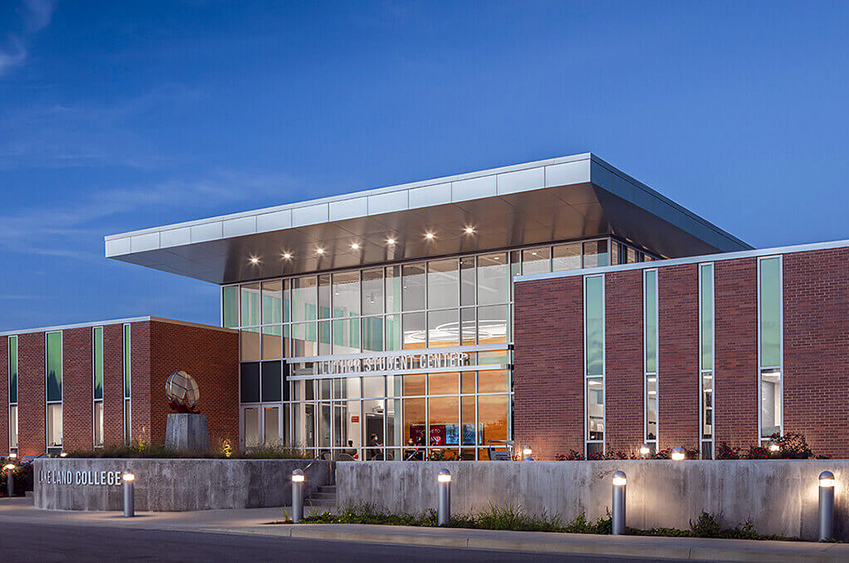
Lake Land Fall Enrollment Tops 4,300, Highest in Seven Years
Lake Land College | September 14, 2026
Article Summary: Lake Land College enrolled 4,313 students this fall, a 4.2% increase and the college’s highest headcount in seven years, administrators told the Board of Trustees on Monday, September 14, 2026 — the same week the college was named the nation’s top community college for educational outcomes by WalletHub.
Fall 2026 Enrollment Key Points:
- Headcount rose 4.2% to 4,313; full-time equivalency rose 1.8%, the highest since Fall 2019.
- Adult education (GED/ESL) headcount jumped 35.6%; dual credit rose 10% to about 1,500 students, the college’s largest single population.
- Full-time enrollment fell 1.8% while part-time enrollment rose 8.9%.
- The Enrollment Initiatives Team’s stretch goal — surpassing Fall 2019 totals, requiring 313 more students than Fall 2025 — was not fully met.
MATTOON — Lake Land College’s fall headcount reached 4,313 students, its highest enrollment in seven years, Vice President for Student Services Heather Nohren told the Board of Trustees on Monday, September 14, 2026, in a data discussion comparing the fall 2026 10th-day census to the same point a year earlier.
Headcount rose 4.2% and full-time equivalency rose 1.8%, the highest FTE figure since Fall 2019, Nohren said.
Where the Growth Came From
The sharpest percentage increase came in adult education. GED and English as a Second Language headcount rose 35.6% and FTE rose 15%. Dual credit, the college’s largest student population at about 1,500 students, grew 10% in headcount and 11% in FTE.
Students age 23 and older were up 6.2% — a reversal Nohren described against the 18% decline reported last fall. New students rose 3%, continuing students 3.7%, and certificate-seeking students in short-term programs 7.1%.
Part-time enrollment rose 8.9% while full-time enrollment fell 1.8%, which Nohren attributed to the broader national trend of students balancing work and school.
Fourteen of the 31 high schools in the district sent 35% or more of their graduates directly to Lake Land, up from 11 last year. About 29% of district high school graduates enrolled at the college, and about 35% of dual credit students went on to enroll.
Ninety percent of students are in-district. In-district enrollment rose about 5% and out-of-district enrollment about 15%. Enrollment at the Effingham Technology Center remained stable at nearly 500 seats.
Program Mix and Capacity Limits
The largest programs by headcount are dual credit, the Associate in Applied Science and the Associate of Arts. Career-technical AAS programs generate the most credit hours and represent roughly 47% of FTE, Nohren said. The most popular online program is Medical Coding; the largest in-person programs are Nursing, John Deere Tech, Dental Hygiene and Cosmetology.
Several high-demand programs are capped because of accreditation requirements or facility and instructor ratios, including Nursing, Cosmetology, Esthetics, HVAC and Welding.
Lilly asked administrators to request and compile official enrollment numbers from peer Illinois community colleges for comparison. Nohren said she would provide that data at the next regular board meeting.
Goal Missed, but Campaigns Credited
Earlier in the meeting, Pam Hartke, associate dean of recruitment and enrollment management and chair of the Enrollment Initiatives Team, reported on the work behind the numbers.
The team was formed a few years ago with four members — Hartke, Nohren, Director of Marketing & Public Relations Kelly Allee and Lisa Cole — and has since expanded to 10 members spanning workforce development and academic services. It meets biweekly and tracks more than 119 individual tasks and initiatives, with assigned owners and deadlines, using Smartsheets.
The team’s stretch goal was to surpass Fall 2019 enrollment, which would have required an increase of 313 students over Fall 2025, with a separate goal of 87 additional adult students. Hartke said the stretch goal was not fully met, though significant progress was made.
Initiatives included social media campaigns, direct mail, digital advertising, monthly counselor and adult newsletters, and a large-scale phone campaign targeting students who had applied but not enrolled. The college reinstated a paper application to reduce technology barriers for non-traditional and adult students, particularly at off-campus outreach events.
Faculty volunteered to contact students in their program areas who had applied but not enrolled, and to encourage continuing students to register early. Hartke attributed a 77% continuing-student retention rate to that outreach, against a 67% national average.
Five “Fast Track to Fall” one-stop enrollment events were held — a sixth was canceled because of weather — including the first Saturday event, held on the main campus and at the Effingham Technology Center. The events drew 60 attendees and generated 468 credit hours, or 29.1 FTE, with advising, registration, testing, book list printing and book pickup offered on site. Eleven non-traditional student tuition waivers, three credit hours each, were awarded at the events.
New “How-to College” technology sessions, introduced to help students learn the college’s virtual machine, Hub and Canvas platforms, drew 133 students during Welcome Week, with additional workshops planned through November. A “Stop, Don’t Drop” campaign sends proactive communication to online students before and during the first week of classes to reduce early withdrawals.
Hartke said the team is exploring development of a Strategic Enrollment Management Plan, and that Spring 2027 outreach is already underway.
National Ranking
In his report, President Jonathan “Josh” Bullock told the board that WalletHub ranked Lake Land College the No. 1 community college in the nation for educational outcomes for 2026, and No. 1 in Illinois across all three measured categories — educational outcomes, cost and financing, and career outcomes. Press releases were already in circulation, he said, and the minutes record that the board expressed strong enthusiasm for the achievement.

Light Rain
