
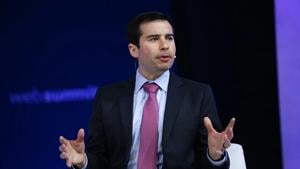
Senate committee advances Sonderling’s Labor nomination
U.S. senators voted on Thursday to advance the nomination of Keith Sonderling, President Donald Trump’s pick to lead the U.S. Department of Labor.
Lawmakers on the Senate Health, Education, Labor and Pensions committee, in a 12-11 vote, advanced Sonderling’s nomination to lead the Labor Department. The former secretary, Lori Chavez-deRemer, stepped down due to accusations of an improper relationship with a subordinate.
Sonderling was confirmed as deputy secretary of Labor in 2025 and has served as acting secretary since April. The Department of Labor has increased its responsibilities through the Trump administration as it takes on grants and programs formerly handled by the U.S. Department of Education.
U.S. Sen. Bernie Sanders, I-Vt., voted against Sonderling’s nomination and criticized his leadership of the Labor Department.
“We need a secretary of Labor who is going to stand up to the greed of corporate America, who is going to represent the needs of working people,” Sanders said. “I do not believe Mr. Sonderling is that nominee.”
In his confirmation hearing, senators questioned the department’s ability to take on additional responsibilities. Sonderling pushed back on questions and criticisms. He said the Education Department’s management program was dated and Labor could meaningfully change it.
Sonderling also said he hopes to include data on AI’s impact in the workforce. He said the U.S. Bureau of Labor Statistics will soon include data points on AI’s workforce transformation.
“We need that data, we need it in order to make informed choices and I think we’ve got a lot of hard choices to make with regard to AI,” Sen. Josh Hawley, R-Mo., said in Sonderling’s confirmation hearing.
Sonderling also said the department can use AI to focus on fraud enforcement under his leadership at the Labor Department. He said more than $135 billion in unemployment benefits were stolen during the COVID-19 pandemic.
“We’re telling the states to verify first and pay later,” Sonderling said. “Stop paying first and verifying later.”
The department plans to launch an unemployment fraud database to create a comprehensive system that will track payments. He pointed to fraud databases in Alabama as an example for the committee to replicate.
“They have some of the lowest fraud and improper payment rates in the country because they’re verifying,” Sonderling said. “They’re going and making sure that person is alive, that person lives in Alabama, that person works in Alabama, they’re going to the employer.”



Sunny
