
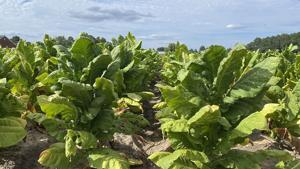
Red-dyed diesel fuel actions stained by one-year increases over 70%
Expanded access to the tax-exempt, red-dyed diesel fuel on the federal and North Carolina level has drawn praise for even the smallest of savings and criticism for barely easing diesel fuel prices that have climbed 72.1% in the state and 71.1% nationally in the last year.
Last week, first-term Democratic Gov. Josh Stein suspended enforcement of the penalty for using red-dyed diesel fuel on highways through the end of the calendar year. Monday, second-term Republican President Donald Trump ordered a waiver on restrictions and the federal excise tax so it can be used on highways, including tractor-trailer rigs.
The tax relief is 24.4 cents per gallon. That’s 3.8% of the national average price.
The penalty in North Carolina for using off-road, or red-dyed diesel, on public highways is a Class 1 misdemeanor and a civil penalty equal to the greater of $1,000 or five times the motor-fuel tax due. The federal penalty is $1,000 or $10 a gallon, whichever is greater.
“Last week I took action to help provide some relief at the pump for North Carolina’s farmers, and I asked the IRS to pause enforcement of the red-dyed diesel tax at the federal level,” Stein says in a release from the White House. “I am pleased to see farmers across the country will now get this same relief. Let’s keep working at every level of government to help people keep more money in their wallets.”
Thursday’s price for diesel in North Carolina, according to AAA, is $5.99. A state record was set Sept. 19 at $6.24. Last week, the average was $6.07. One year ago, the price was $3.48.
The national average for diesel is $6.28. A national record of $6.52 was set on Sept. 22. One year ago, the price was $3.67.
Agriculture and agribusiness have a $117 billion annual economic impact for North Carolina, Stein said. It has been the state’s No. 1 industry forever. About 42,500 farms are operated on 8.1 million acres from Murphy to Manteo.
The state is eighth in the nation in the value of agricultural products sold, 14th in exports.
North Carolina production is No. 1 nationally in sweet potatoes, all tobacco, flue-cured tobacco, and poultry and eggs. The state is No. 2 in Christmas tree sales, turkey production, and food-size trout sales. It is No. 3 in cucumbers and hogs, No. 4 in peanuts and broilers (chicken), and No. 5 in cotton.
In an email to The Center Square, the Owner-Operators Independent Drivers Association said the federal relief is minimal. Other organizations in published reports have said much the same.
“Every $1 increase per gallon in fuel costs our members around $400 more per week, and sustained high prices will put many truck drivers out of business,” said President and CEO Todd Spencer. “Meanwhile, oil executives pad their profits while working families struggle. Consumers also pay the price. Roughly 70% of domestic freight moves exclusively by truck, and the cost of fuel ultimately gets passed on.
“OOIDA believes allowing the wider use of red-dyed diesel will provide minimal relief. Market stability is essential to bring down costs for the long haul.”
And market stability, according to consensus, has been missing since Feb. 28, when America and Israel attacked Iran. The consequence was control of the Strait of Hormuz, which beforehand was where about 20% of the world’s oil supply moved.
“The typical trucker will save more than $100 every time they fill up,” Trump told the crowd in Nebraska on Monday as he signed the executive order.
The president said the waiver will “save farmers millions of dollars and drive down the cost of goods.”
In North Carolina, Stein shared positive reactions.
“Fuel has been one of the biggest costs for growers this year,” said Todd Waters, president of the Southeastern Cotton Ginners Association. “Including gins in this relief means savings that support the whole cotton harvest in North Carolina. We appreciate the governor’s office for acting quickly.”
Phillip Farland, former state director of the USDA Farm Service Agency, said the military action in Iran put North Carolina farmers “in an unprecedented no man’s land, many worrying if they can keep their family farms afloat.”
“Diesel expenses have been the number one concern I’ve heard from farmers in what has already been a challenging year,” said President Shawn Harding of the North Carolina Farm Bureau. “This action came less than a day after Governor Stein received a letter from the North Carolina Farm Bureau and the agricultural community asking for help, and we are truly grateful for these effective and practical measures toward protecting and preserving North Carolina’s farm businesses.”



Sunny
