

Election 2026: Cooper leads Whatley by nearly 8% in newest poll
Democrat Roy Cooper leads Republican Michael Whatley 48.8%-40.9% in new polling released Monday of their battle to win a seat from North Carolina in the U.S. Senate.
Pattern history for half a century would put Whatley a favorite and Cooper the underdog, yet reality since each declared formally in July of last year has been Cooper leading the polls since Day 1 and also leading in Federal Election Commission filings. Where Whatley might have had better fiscal strength in super political action committees, they’ve pulled away this month to focus on other tight race throughout the country trying to protect Republicans’ majority.
Sunday night, the president weighed in for the man he picked to lead the Republican National Committee in his pursuit to return to 1600 Pennsylvania Ave. Whatley’s campaign told The Center Square late Thursday that its plans for the coming days and weeks are a doubling down on winning.
The sampling of 1,091 likely voters taken Thursday, Friday and Saturday by the Trafalgar Group carries a +/- 2.9% margin of error.
Inside the numbers Trafalgar shared, respondents numbered more Republicans (40.3%) than Democrats (37.8%) or independents/other parties (21.9%). Most respondents were older, too, with 37.2 ages 50-64, 32.3% age 65 or older, and little more than 30% ages 18-29 (5.9), 30-39 (11.2%) or 40-49 (13.4%).
Cooper led Whatley 67.1%-20.8% among Blacks, though poll participation overall was 71.8% white and only 20.5% for Blacks.
This U.S. Senate seat is viewed as a major player nationally in the quest for a majority in the chamber. Republicans have 53 seats today. In no particular order, Ohio, Michigan, Georgia, Maine, Iowa, New Hampshire, Alaska, Texas and Montana are the other top battlegrounds among 35 races. Two of those are special elections, the other 33 are in regular rotation.
Cooper’s bid to succeed Republican Sen. Thom Tillis would be trend-breaking if successful. Tillis, Richard Burr and Ted Budd have made Republicans 5-for-5 since Democrat Kay Hagan won election to the U.S. Senate in 2008. Democrats haven’t won a midterm U.S. Senate seat since John Edwards in 1998.
Republicans in statewide races for this decade – 2020, 2022 and 2024 – are 32-10 against Democrats, a party with significantly declining voter registrations for more than 20 consecutive years, according to State Board of Elections data analyzed by The Center Square.
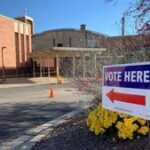
Absentee voting began on Sept. 4 with the mailing of ballots to the nearly 50,000 requesting them, opening a 61-day window to Nov. 3. Friday was the voter registration deadline.
Absentee requests do not require a reason; anyone can file with their respective counties. The deadline for an absentee ballot in the mail to be in a county election board office is when the polls close at 7:30 p.m. on Nov. 3; the request deadline is 5 p.m. on Oct. 20.
Early in-person voting is Thursday through Oct. 31, and same-day registration is permitted.




Sunny
