
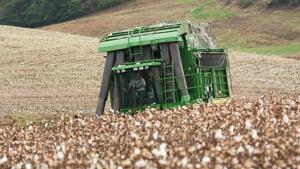
On National Farmers Day, farm bill stuck in limbo
Despite several federal farm and agriculture assistance programs having stopped in the middle of harvest season, Congress likely won’t reauthorize funding until after the midterm elections.
Congress is woefully behind on passing a federal farm bill, which it is supposed to do every five years but has not since 2018, relying on extensions instead.
Farm bills update and authorize funding levels for a variety of programs that support the agricultural industry and rural areas of the country.
That includes taxpayer funding for farm loans, crop insurance and price support, disaster assistance, federal agricultural research, conservation and forest management programs, animal disease testing, support for rural hospitals and water infrastructure, and energy assistance loans.
With the most recent farm bill extension expiring Sept. 30, some programs have temporarily expired or experienced disruptions as well.
Enrollment in the Conservation Reserve Program is paused, as the Farm Service Agency currently has no congressional authorization to approve new contracts.
Additionally, the Rural Economic Development Program and Biorefinery Assistance Program are in operational limbo and lack new funding streams. While the Specialty Crop Block Grant Program received advanced funding in 2025, program operating authority expired Oct. 1, potentially slowing or limiting grant awards.
The Market Access Program, Organic Agriculture Research and Extension Initiative, and some animal health and disease prevention programs all face implementation uncertainty.
While the U.S. House passed its version of the legislation months ago, the Senate has lagged behind on its edition, which passed out of committee mid-September and still awaits a floor vote. The chambers must ultimately reconcile the differences to produce and pass a single compromise bill before President Donald Trump can sign it into law.
Part of the reason for the Senate bill’s delay is due to lawmakers haggling over whether to authorize year-round sales of E15 gasoline and whether to delay the new state cost-sharing requirements for SNAP.
In their posts thanking farmers Monday – which is National Farmers Day – several lawmakers acknowledged the challenges the U.S. agricultural industry currently faces.
Sen. Ted Budd, R-N.C., admitted that it’s “been a difficult season for agriculture,” and Rep. Ashley Hinson, R-Iowa, wrote that “times are tough” for farmers.
Operational costs have ballooned for farmers since the ongoing U.S.-Iran conflict began in January. Disruptions in the Strait of Hormuz, a major trade corridor for oil and fertilizer compounds, have spiked costs for both fertilizer and fuel.
On average, diesel prices have risen 45% since the conflict began and fertilizer prices are up 15% from last year, according to a September analysis from the American Farm Bureau Federation.
Total farm debt is projected to break records in 2026, reaching roughly $625 billion, according to the U.S. Department of Agriculture’s “U.S. farm sector financial indicators” report, while total production costs are projected to top $478 billion.




Sunny
